A Capital Legacy
The Knights of Columbus and the Soul of Washington
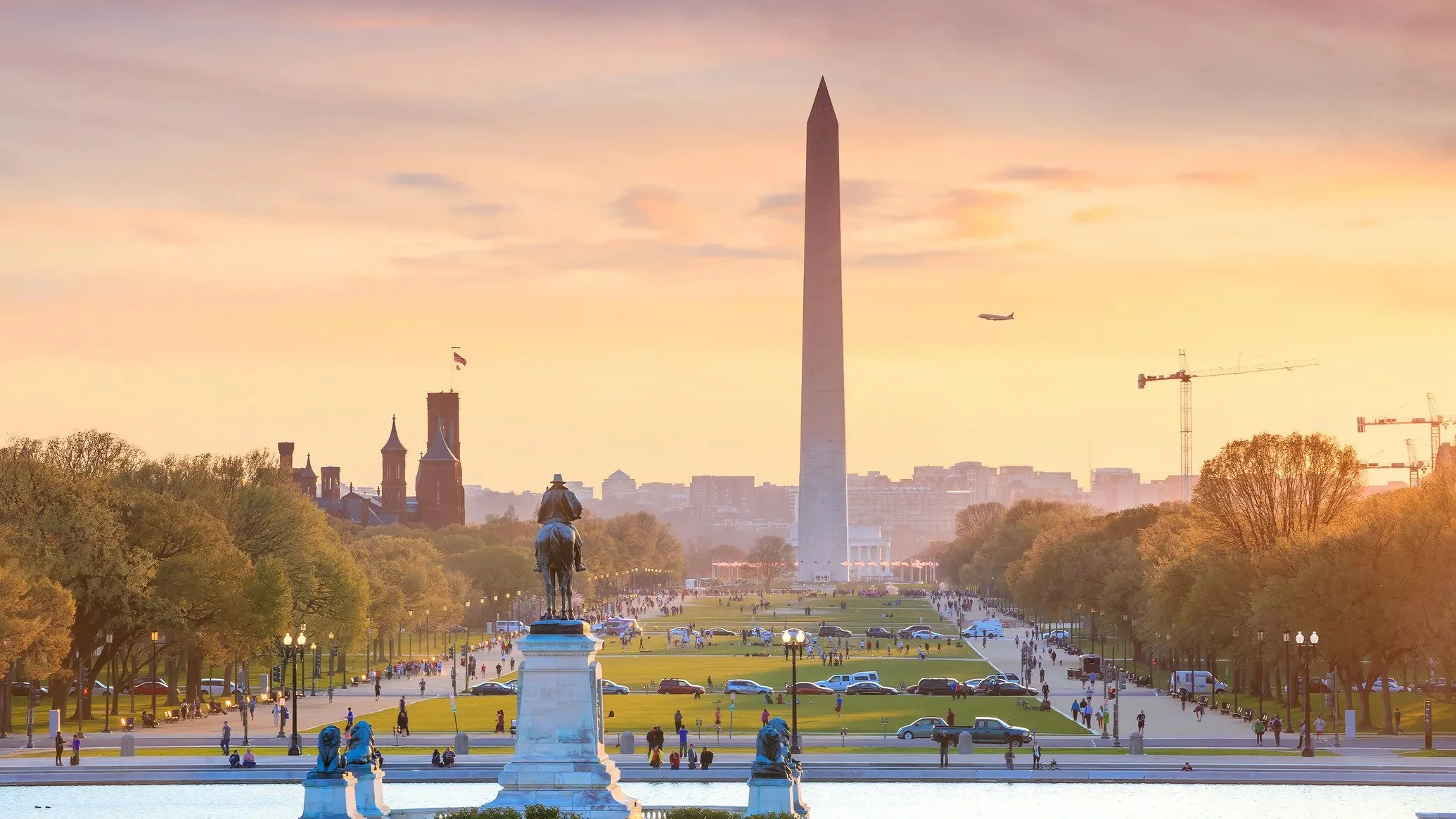
Before cherry blossoms framed the National Mall and when gas lamps still flickered along the streets of our Federal City, a quiet revolution of Catholic brotherhood had already taken root in the shadow of the Capitol. In April 1897, just months after the Order crossed the Mason-Dixon line into Baltimore, the Knights of Columbus established Washington Council #224. It was a seed of faith and fraternity planted in a city that was becoming the spiritual and civic heart of Catholic America.
By 1899, the District of Columbia had earned its place as a state jurisdiction within the Order. Five councils were already thriving, supported by the encouragement of James Cardinal Gibbons, the towering leader of the Archdiocese of Baltimore. From that moment forward, the Knights became not only participants in Catholic history, but its architects in the nation’s capital.

Their first major national gesture came in 1904 on the campus of The Catholic University of America. Ten thousand Knights gathered to present a gift of $50,000 to endow a chair in American history. The check was a towering symbol of commitment: ten feet tall, four feet wide, written in calligraphy on vellum. For decades it hung in quiet reverence on the walls of the University, a lasting sign of the Order’s devotion to Catholic education.
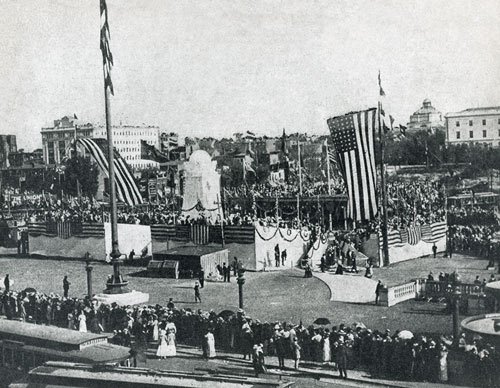
Two years later, the Knights turned their attention from the university campus to the heart of the city. They supported a bill in Congress that led to the creation of the Columbus Memorial Fountain outside Union Station. When it was unveiled in 1912, the event became one of the most memorable public celebrations in the capital’s history. More than 20,000 Knights and family members filled the streets. A parade of 4,000 Fourth Degree Knights marched in full regalia. President William Howard Taft attended the unveiling. The following year, on the night before he left office, he returned to visit the Knights one last time.
In 1914, Catholic University once again called on the Order, and the Knights responded with an extraordinary $500,000 to fund graduate fellowships. That support also built Graduate Hall, which hosted council meetings and state conventions and eventually became the home of the iconic 1904 check. Today, it is displayed in McGivney Hall on campus where the current iteration of the CUA Council meets for their monthly meetings.
As the Knights deepened their involvement in education, they sought new ways to expand access to professional training. After World War I, local members began offering evening classes to help working men and returning veterans. By 1922, these programs had evolved into Columbus University, founded by the Knights of Columbus to serve students who could not afford to attend full-time during the day. The university’s law school quickly gained a reputation for excellence and for its mission-oriented spirit.
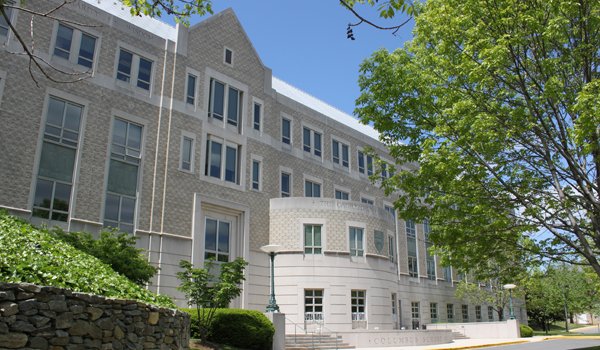
In 1954, Columbus University’s law program merged with Catholic University’s law department to form the Columbus School of Law. The merger helped meet new accreditation standards and formalized the relationship between the Knights’ legacy and the Church’s educational mission. The law school remained downtown until 1966, when it moved to the university's main campus. A new law building was completed in 1994, and its courtyard was named in honor of the Knights of Columbus. A bronze plaque inside commemorates the Order’s $2 million gift to the school in 1989.
Today, the Columbus School of Law remains a premier Catholic institution of legal education. With nationally recognized clinics, a strong emphasis on ethics, and continuing ties to the Order, it serves as one of the most visible and lasting fruits of the Knights' educational vision.
Meanwhile, the spiritual landscape of Washington continued to grow. The National Shrine of the Immaculate Conception, whose foundations were blessed in 1920, quickly became a spiritual centerpiece of American Catholic life. The Knights were present at every stage of its development. They stood at the site blessing, laid the foundation stone with the bishops, filled the Crypt Church in 1926, and returned in 1932 for the Shrine’s expansion. That same year, Washington hosted its first Supreme Convention, marking the Order’s 50th anniversary with solemnity and celebration. More than a thousand Fourth Degree Knights participated in the events that filled the city with color and pride.
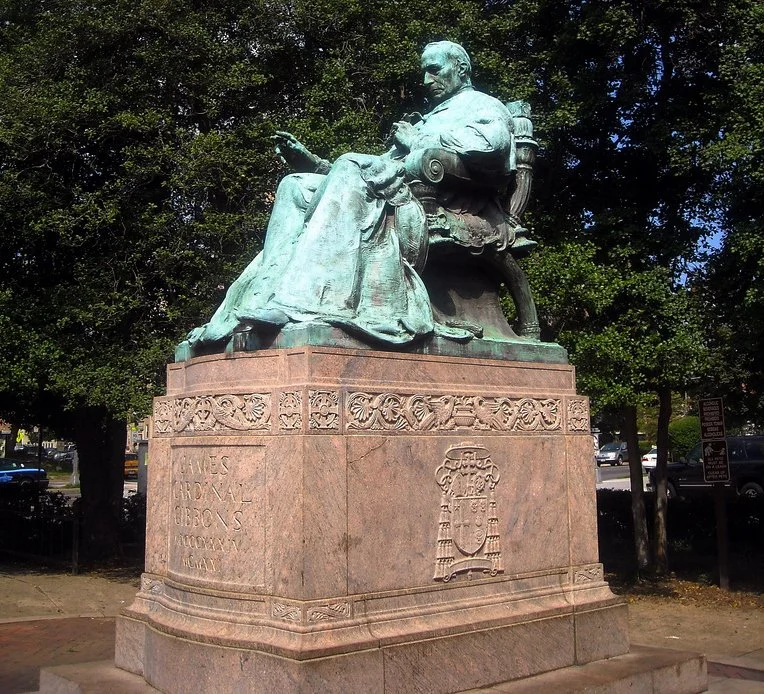
As part of the convention week, the Order also unveiled a statue of Cardinal James Gibbons, their early patron and one of the most influential voices in American Catholicism. The statue was placed on land donated by the city in front of the Shrine of the Sacred Heart at 15th Street and Park Road NW. Knights from eight provinces joined the parade and dedication, which was reviewed by President Herbert Hoover. For many years afterward, local councils would return to that corner each Labor Day to pray and give thanks at the foot of Gibbons’ likeness, a silent sentinel in bronze who had once stood at their side.
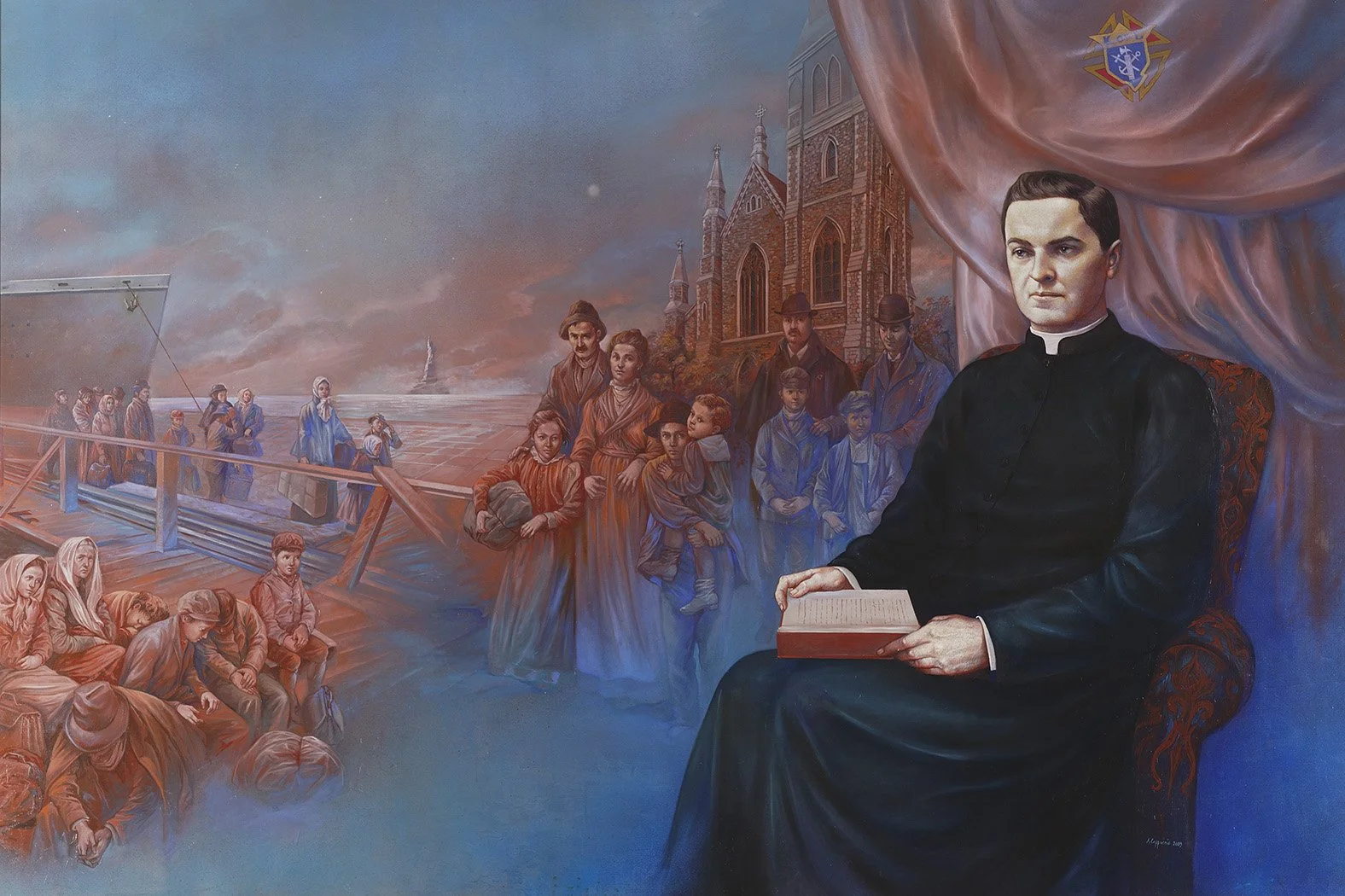
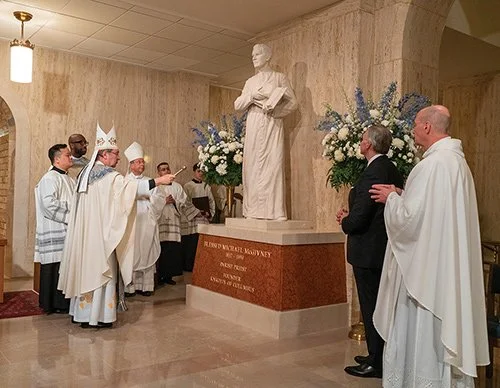
The relationship between the Knights and the National Shrine, now a minor basilica, has only deepened over time. Their histories are not merely parallel but inseparable. The Knights have supported nearly every chapter in the Shrine’s growth, from the donation of the grand carillon bells to the decoration of the Incarnation Dome. They established the Shrine’s weekend usher program, supported the Trinity Dome, and helped ensure the Shrine's ongoing maintenance and liturgical presence. In 2023, that legacy was honored in a special way with the installation of a statue of Blessed Michael McGivney in the Hall of American Saints. His image stands not only as a tribute to the Order’s founder, but as a symbol of the living witness that the Knights continue to offer through service, charity, and faith.
In 1965, the Order also established the Pro Deo and Pro Patria Scholarship Fund to support undergraduate students at Catholic University. In 1979, Supreme Knight Virgil Dechant dedicated his administration to Mary at the National Shrine and pledged $500,000 to ensure its preservation. That same year, Pope John Paul II made his first papal visit to Washington. For his Mass on the National Mall, Fourth Degree Knights formed the honor guard, continuing a long tradition of ceremonial presence at the Church’s most visible moments.
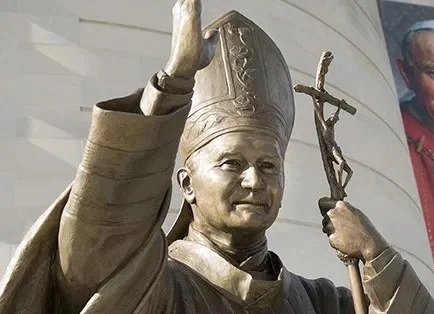
That papal visit inspired a permanent tribute. In 1995, the Knights committed $5 million toward the construction of a national center dedicated to John Paul II’s life and legacy. The resulting Pope John Paul II Cultural Center eventually became the Saint John Paul II National Shrine. Entrusted to the Knights in 2011 and elevated to national shrine status in 2014, it now stands across from Catholic University as a place of pilgrimage, education, and prayer. The Shrine features an award-winning exhibit on the life of Saint John Paul II, a relic chapel, and a full liturgical calendar, continuing the legacy of evangelization he embodied.
Through war and peace, in moments of celebration and sorrow, the Knights of Columbus have shaped not only the landscape of the city but the soul of Catholic America. Our legacy lives in statues and scholarships, in Shrines and schools, in the stillness of prayer and the movement of thousands gathered in fraternal unity. It is a legacy not only remembered. It is, in every way, monumental.